Our newest Q&A session is dedicated to the issue of online store security: read all about the technical aspects of keeping your website safe!
Taking care of your personal belongings is #1 priority.
And your drop shipping store is not simply a website you own – it’s not less than your personal achievement, your source of income, and, most importantly, your key to building a better future for yourself and your family.
How to make sure that this valuable asset won’t fall into the wrong hands?
Let’s figure it out!
1. What could be the most likely threats to my store?
From the technical point of view, there are 3 basic threats that are important to consider:
Website platform or plugins malfunction
If you haven’t updated your CMS platform for a long time, or if you have installed some pieces of additional software (themes, plugins, add-ons, etc.) from an unreliable source, you are basically putting your store at risk.
Password hack
If you have a ‘weak’ password or if you keep it written in an easily available place, it won’t be difficult for hackers to steal your store data, as well as your money…and your business reputation.
Viruses
If there is no trustworthy antivirus software installed on the device you use to run your store, or if you use an outdated browser version, the device (and the store) gets especially vulnerable.
2. How to make my website secure if it’s not ready yet? What can I do on the store development stage?
While your store is just being developed, you can do the majority of the steps necessary to ensure its safety:
Consider which devices you’ll use to run your store. Contemporary automated solutions make it possible for you to access the store with the help of personal computers, laptops, tablets and smartphones. It gives you more freedom, and at the same time, more responsibilities. You need to check the browser versions on EVERY device and make sure you’re using the latest browser version.
The same is fair for antivirus programs: check if you have them installed on EVERY device you’ll be using for your drop shipping business, and update them to the latest version if necessary.
Create a strong password for your hosting account and for your website admin panel. Ideally, these passwords should contain at least 8 characters each, and it’s a great idea to include numbers and uppercase letters in them. The general rule is: the more complicated is the password, the harder it will be for a hacker to get an illegal access to your website.
Pay a special attention to the place where you are storing all your valuable passwords. It’s not a good idea to use any kind of online storage for this purpose.
Make sure that you’ve used the latest version of a CMS platform as the basis for your online store. Check its official website to learn more about the newest updates and most relevant proven versions.
Do your best to only install plugins, themes and add-ons that are officially recommended by the CMS platform developers. Be really careful about so-called nulled plugins that are distributed for free – they are very likely to contain viruses and hurt your webstore.
3. How to make my website secure if the store is already running?
First, make sure you’ve taken all the steps described above.
Then, do the following:
Follow the updates as soon as you learn about the newest ones. It’s vital for everything you use: the CMS platform, themes and plugins, antivirus software and browser versions. If all of them are kept up-to-date, it’s much harder for hackers and viruses to do harm to your store and you.
Change login and password from time to time to prevent any unpleasant surprises. Make sure to always use an actually working email address – this way, you’ll be able to restore the login details in case you lose or forget them.
Create backup copies of your webstore regularly – if something goes wrong, you won’t have to destroy the store and start all over again, you’ll simply have to go back to the latest saved version.
4. I’m worried and I don’t think it’s enough. Can I do something else?
If you think you need to do more to protect your website, our developers can recommend one of the following safety plugins for WordPress:
Simply speaking, these free plugins limit the number of login attempts when somebody tries guessing your login details and enter the admin panel, and they also alert you if there’s a security threat.
5. There’s a virus! Or a hacker attack. Or a dangerous software, I don’t know what’s it exactly! What should I do?
Stay calm! It’s gonna be fine, just follow these simple steps:
Scan your device for viruses and delete all the suspicious things your antivirus finds
Change the password to your hosting account, and the webstore login details
Try to remember if you’ve installed any pieces of software recently, and delete all the questionable elements
Update your CMS, all the trustworthy plugins and extensions to the latest version available
Restore your webstore using the most recent backup copy you have
If your store is built with the help of AliDropship solutions, don’t hesitate to contact our support team! The best option is to send an email on support@alidropship.com address – this way, you’ll be able to describe the problem in detail, tell about your actions, and attach screenshots if necessary.
Everyone is talking about EU GDPR and its effects. Let’s find out the definition of GDPR and talk about its impact on your dropshipping business!
Data protection is no joke.
Everyone needs privacy and safety while being online, and of course, everyone wants to shop online with confidence.
This is why there’s such a buzz around EU GDPR, the newest set of legal requirements that regulates the storage and use of online shoppers’ personal data.
Let’s try to figure out what it is, exactly!
What does EU GDPR stand for?
GDPR is an abbreviation that means General Data Protection Regulation.
Simply speaking, it is a regulation in the law system of the European Union. The main idea behind GDPR is to protect the personal data of EU citizens, and to guarantee their privacy.
What will happen to GDPR in May, 2018?
The basis for GDPR was introduced in 1995 – as you can guess, the world of informational technologies has changed radically over these years, and it’s now really necessary to edit the regulation.
A brief GDPR overview makes it clear that the new regulations oblige companies to be more careful while storing and processing the customers’ personal data.
You must follow the regulation if your customers are EU citizens
It doesn’t really matter where your business physically exists, or where it is legally registered. Generally speaking, if your website visitors are EU citizens, you must ensure the full protection of their personal data, and modify all of your data policies in accordance with the GDPR requirements.
Any piece of the website visitor’s data can be considered personal
Interestingly enough, the updated version of GDPR doesn’t give the exact definition of personal data and the types of information details that must be protected under the new regulations.
Still, the European Commission’s official website explains that any pieces of information that can possibly be used to identify the personality of the website visitor can be classified as personal data.
It means that online store owners must be exceptionally careful about the following pieces of information provided by their clients:
Name and surname
Email address
Home address
Identification card number
Location
IP address
Cookie ID
These (and some else) personal details must be handled in full accordance with the GDPR.
The website must ask the visitors to give their consent on the data usage
Simply speaking, there must be some kind of a designated page, or a form, or a pop-up window that:
Explains what kind of personal data is collected on this website, who will get and use it, and for what purpose (in clear terms and a simple language)
Asks the visitors to confirm they agree to provide this kind of information
Makes it possible for a user to easily cancel this agreement and withdraw the consent
The website must notify the visitors about data breaches
If the website gets hacked, or something similarly dangerous happens to it, there is a chance that the visitors’ data might have gotten stolen.
The companies must notify their buyers and website visitors about such events within 72 hours of discovering the breach.
The website must provide its visitors the right to access the gathered information
So, the webstore visitors now have the right to ask what kinds of personal details this website collects, and how the data is used.
The website, in turn, must be able to provide the necessary explanation on an electronic format and tell what’s the purpose of collecting and using these details.
It must be possible to delete a person’s data upon request
The website must have a technical possibility to erase personal data of an individual, stop it from further spreading, and prevent it from being used by third parties if an individual asks for it.
Is it really necessary to make my store a GDPR-compliant site?
Absolutely!
Even if you’re not residing in the EU and aren’t specifically targeting the EU customers, the global nature of drop shipping means that anybody can stumble upon your website, and order something from you.
Across different countries in the European Union, there will be set special Supervisory Authorities (SA): their purpose is to perform websites audit, issue warnings for non-compliant websites, and suggesting improvement measures for every particular case.
According to the updated version of GDPR, non-compliant organizations will need to pay a penalty charge. It can be amounted up to 4% of the company’s annual global turnover, or €20 million (whichever is bigger).
What exactly do I need to make aGDPR-compliant store?
Follow this step-by-step guide, and it will be fine!
1. Revise the types of data you collect
Since you’re running a drop shipping store, most likely, the personal details you gather are names and surnames, email addresses, physical addresses, phone numbers, payment details…anything else?
This analysis is a good reason to rethink your questionnaires and data forms (if you have any): both you and your customers will benefit from the renewed, ‘minimalistic’ forms.
As you probably remember from our conversions boost guide, the less details a shopper has to provide during checkout, the more likely he/she is to complete the purchase.
At the same time, a short personal details form fully matches your interests, too. Your goal is to gather only the strictly necessary personal info: if you don’t collect unimportant data that is not required for the order processing, you don’t have to protect it – and you don’t have to explain your visitors why you need to know their eye color or Zodiac sign.
2. Think who you share these details with
At this point, you can surely say what types of customers’ data you collect. Now, it’s time to think whom you provide with these personal details.
Typically, you share such info with mass mailing services (Aweber, MailChimp, etc.), with outer plugins and themes, and, obviously, with AliExpress sellers.
Mostly, you need this breakdown to give a clear data usage explanation to your clients – later, in your privacy agreement, you’ll list all your partners/technical solutions and clarify who uses the personal details, how exactly, and for what purposes.
Also, if you have a list of entities/tools that have some kind of access to your clients’ personal data, you can conveniently go through this list and find out whether each one of them is GDPR compliant. It’s a good idea to only do your business with those who stick to the new regulations.
3. Write a new privacy note
It’s wise to have a separate website page designated specifically for this purpose, but you can also write it all on your Terms and Conditions page.
First, write that your webstore is GDPR compliant.
Then, write the full list of personal details your webstore collects (IP address, the type of device used to browse the site, cookies, the visit duration, email, phone number, physical address, postal address, etc.)
Then, repeat the same list, and specify who exactly uses the collected personal details, and for what purposes (for example, Google gets the device information and visit duration within the sphere of Google Analytics goals tracking, Aweber uses email addresses to send mass emails, manufacturers/stock owners use the order product details to assemble the packages, delivery companies use the buyer’s physical address to send the orders, etc.).
Then, explain (in simple and understandable terms) that every store visitor has the right to demand a copy of his/hers personal details collected by you, and can even ask you to delete all these details permanently.
Then, write a specially created email address: it will be the emergency contact address for the people who have questions or requests about their data privacy. Don’t use this address for any other purposes, and don’t show it in your regular contact details – this way, you’ll be sure that every letter coming on this address is related to this particular issue.
Finally, write that if after reading this, the visitor keeps browsing the site, it means he/she fully agrees with these terms and gives full consent to use his/hers personal details for the legally approved and business-necessary purposes. If the visitor doesn’t agree to the terms, he/she must leave the site immediately. If the person has already given consent to use his/hers data, but now wants to withdraw it, he/she should contact you by email and ask to delete all the data.
Please note: since May, 25th, every new custom-made store developed by AliDropship team has a GDPR-compliant ‘Terms and Conditions’ page that covers these basic points. Clearly, the details (contact email, the list of third parties using the personal info, etc.) should be amended by the owners of these stores because every business is managed in its own unique way.
4. Set up a pop-up or a push notification on your landing page
This is a highly useful action if you want to prevent the cases of misunderstanding (for example, if your store visitor claims he/she has simply looked through the products in your store and hasn’t specifically visited the privacy note page, and therefore, hasn’t given the consent to collect his/hers data).
To ensure your own safety, you can set up a privacy notification that appears when someone visits your site. The message should say that:
The website collects some personal details of every visitor
It is recommended to read the full explanation of the webstore’s privacy policy (here, you provide the link to the page with your privacy note)
By clicking ‘OK’ on this notification, the visitor confirms he/she has read the privacy note and agrees with its terms
For this purpose, you can safely use the GDPR Banner plugin for WordPress: it helps you create a catchy banner that is linked to your privacy policy page.
5. Think how to handle every procedure
Under the new regulations, you must be able to:
On a visitor’s request, show what kind of this visitor’s data you’re collecting
If necessary, delete a user’s personal details
If required, withdraw a user’s consent to further use his/hers personal data
Do a little research and pick the relevant plugins that would perform these tasks if necessary: developers all over the globe are currently offering various GDPR-friendly solutions for WordPress that can make your webstore more compliant with new regulations.
Our team has tested several options, so we can recommend GDPR plugin that covers a wide variety of the necessary tasks, and Delete Me plugin that specifically allows users to delete their data from a particular website.
6. Improve the store security
If your store is well-protected from malware and hackers’ attacks, most likely, you won’t have to deal with security breaches.
7. Think what to do if a data breach still happens
According to the new regulations, as soon as you learn about a data breach, you need to do the following within the next 72 hours:
Write down its details and keep a record of every incident
Report the incident to the local Data Commissioner (supervisory authority)
Notify your clients about the breach in case it threats their personal rights and freedoms
8. Consult your local lawyer
We strongly recommend you to get legal advice concerning the GDPR: many of the statements in the new regulation are quite ambiguous, and if you want to interpret them in the most favorable way for you, it’s necessary to discuss it with a professional lawyer.
Now you have a general idea about EU GDPR and its influence on your business. Don’t worry – with the due preparation, you’ll keep enjoying your thriving drop shipping store without any troubles!
AliDropship team has recently developed and launched its own signature dropshipping course; let’s find out what makes it so special and why you should start taking it right now!
We take education seriously.
For us, it is really important to provide entrepreneurs-to-be all over the globe not only with the automated solutions that simplify the daily business routine, but also with the dropshipping knowledge and experience we’ve gathered over these years.
This is why we are now happily introducing a full-scale email dropshipping course – read below why your business will benefit from it heavily!
What’s so great about our dropshipping course?
Free access
AliDropship email course is provided for free: all you need to do is sign up here, and all the dropshipping wisdom of our experts will be directed straight to your inbox.
No fees are charged for the access to our course materials, and you can freely return to them at any point of time.
Convenient form
Contrary to the data of webinars and live Q&A sessions, these educational materials won’t disappear after the end of the course.
Also, you can read them at any time and from any gadget that is convenient for you: the text form allows you to research the materials in a flexible and relaxed mode.
Experience-based approach
The course is built on the combined experience of AliDropship team members, from designers and developers to marketing specialists and dropshipping store supervisors.
The diverse background of the course authors and a wide range of tips and case studies covered makes it possible for you to get the in-depth knowledge of dropshipping business in general and the rules of your store management in particular.
Consistency
The course is designed in a way that is comfortable even for the first-time entrepreneurs. It lasts for 7 days, and every day, the subscribers one email covering some particular dropshipping area.
The topics are arranged in the general-to-specific way: the course starts with the explanation of the meaning and the benefits of dropshipping business, and then goes on to elaborate how to choose the perfect dropshipping niche, how to pick the best products, how to set up the technical side of the store, and how to promote it to get your first sales.
Practical focus
Thanks to the course consistency, the subscribers gradually become aware of the essence of dropshipping business, and the lifehacks of managing it with the highest efficiency possible.
And, the course doesn’t simply explain the theoretical business aspects: with every new topic, it shows how to complete this or that specific task, and gives practical guidelines to progress with your own dropshipping store launch.
So, in the 7 days of reading the course materials, you will not just learn the necessary basics of running this rewarding business. You will become confident and skilled enough to launch your own dropshipping store that is optimized to bring you the profits you’ve always dreamed of.
Aren’t you curious to see how this dropshipping course will give the start to a fascinating adventure and turn your whole life around?
Interestingly, the term ‘dropshipper’ can refer to two different types of an entrepreneurial activity. Sometimes, a supplier involved in product stocking and shipment is called a dropshipper, and sometimes, the same word is used to describe a person who simply runs a drop shipping store and never deals with product issues. In this article, we stick to the second meaning of this term, and talk about the newcomers who would love to sell someone else’s products through a self-owned online store.
If you have analyzed different eCommerce options and found out that drop shipping is the perfect choice for you, you are probably wondering how to become a dropshipper. We have prepared this detailed manual for those who have no idea where to start.
Going into drop shipping business is not as difficult as it may seem, but eCommerce newcomers often make mistakes of choosing a risky niche, conducting no market research, focusing on the wrong things and whatnot. Want to have a smooth start? Here’s what you should do step by step.
How to become a dropshipper: find your niche
The first step you should take before launching your store is to find a suitable niche.
Your perfect niche should be:
Promising
Interesting to you
Neither too broad nor too narrow
Popular enough, but not too competitive
Where can you find the ideas for an online store? Brainstorming, web and social media surfing, visiting popular online retail platforms will help you a lot. Your hobbies and interests can inspire you as well. Use such online tools as Google Trends and various tools for keyword selection – you can get lots of valuable ideas there. Keep in mind that your offer should be unique, otherwise you’ll be selling ice to the Eskimos.
To evaluate the chosen niche, follow these simple steps:
Check the relevant products quantity and the number of orders placed on AliExpress to understand if it is available and popular.
Check if the niche demonstrates an ascending (rising) trend in Google Trends on your potential target markets.
Check the search volume in Keyword Planner: the optimal results range from 5000 to 50000.
Check the popularity of the niche in social media: a sufficient amount of groups and communities with more than 30000 followers on Facebook and Instagram means the niche has a nice potential in terms of promotion.
You can use our specialized tool that checks the potential of any drop shipping niche in 11 steps.
Besides, you can take advantage of DropshipMe plugin which allows importing nice products from an awesome dropshipping database. DropshipMe product database includes thousands of best selling products in dozens of trending categories. Experienced dropshipping team has made thorough niche research and picked out best selling items in promising niches. So, you can greatly save your time and start importing products to your store without preliminary niche and product research.
How to become a dropshipper: define your target audience
Now when you know what you are going to sell, your task is to understand who will buy it.
Why do you need to picture your average customer?
Now it’s time to find out who are all these people that are most likely to buy your products – to define your target audience. When you focus your marketing efforts on those who are interested in your offer, you have much better chances to convert them into actual buyers. So, answer the following questions:
Who are your customers?
Use Google Trends to make a customer avatar – an average client profile. Here you can find lots of helpful information about your potential customers: region, language, age, gender, marital status and other social and cultural indicators. Try to understand what matters much for them, where can you meet them (what social networks and online platforms do they prefer, etc.). You can use this information to address to this “average customer” in your future promotional campaigns.
What do they need?
Any product should solve some customer’s problem. So, your task is to determine customer’s demand – and meet it. What do your customers need, what are they looking for? And how can your offer help them?
How much money can they spend?
Your profit is the money that your customers spend in your store. Think about the financial reliability of your customers. Will they be able to make impulse purchases in your store? And try not to target too young audience – they are not always able to pay much.
When you know the answers to these questions, you can to attract the attention of your audience more efficiently, and choose the right tone of communication. Talking to your clients in their language is the cornerstone of effective promotion that lets you increase customers’ loyalty in the future.
How to become a dropshipper: build your store
You can try selling products on various online platforms such as a social network account, or a blog, or an online auction, etc. But if you want to dropship like a pro, you need your own drop shipping online store. Why?
To begin with it gives you a great independence. You will not have to obey someone’s rules and policies. You will not lose your store if your account is banned. No one can suspend you (if your store sells nothing illegal, of course).
In the next place, a specialized site looks more trustworthy and inspires a greater confidence.
For another thing, it is easier to promote a standalone website and optimize it for search engines.
And the last, but not the least – your own website is a good asset which can be sold any time you want and bring you a pretty penny.
To launch a store, you need to choose and buy domain and hosting. There are some points to consider when picking a domain name – study this guide to learn the answers to the most vital questions about it.
Then, you need to select a content management system: it forms the core of your website and lets it operate smoothly. The best solution for an online store is WordPress – an open-source multipurpose content management system. It is safe, easy to install and user-friendly. And what is more – it is free!
How to become a dropshipper: set up the management processes
You cannot imagine how much time you can save if you automate your routine work. Product import, reviews, email marketing, SEO, customer support – all these and many other aspects can be managed in few clicks instead of long hours.
This is another reason to choose WordPress for your eCommerce business: it easily integrates with different services and applications. There are numerous useful plugins and add-ons that can extend functionality of your drop shipping site and boost its performance.
Marketing add-ons are your best helpers to provide stable organic traffic from social networks, stimulate impulse buying, simplify email marketing and solve a pile of other tasks.
And if your use WooCommerce, you can upgrade your store with this selection of smart extensions for any purposes.
Of course, there are more things you will have to deal with – search engine optimization, promotion, customer support… But these are the next steps of your drop shipping journey. And well begun – half done!
And if you want to save your time and efforts, there is another brilliant idea how to become a dropshipper – start your own online business with a ready-made custom store and focus your energy on what you do best!
No matter whether you’ve got sick of working full time in the office or just decided to earn some extra money, the easiest and fastest way to solve these problems is selling goods online. Many online ecommerce platforms such as eBay and Amazon open up such an opportunity for you. But if you really want to make a decent profit, you need to start your own ecommerce business. And drop shipping is definitely the most affordable and least energy-consuming way to pull it off.
So, you’ve decided to get your own drop shipping store, and even purchased our plugin for this purpose – now what? Let’s explore the step-by-step process of launching your awesome moneymaking business!
We have already written tons of tips on how to start a drop shipping business, attract buyers and promote your store in the way that would make your competitors turn green just like Hulk.
However, we regularly receive one simple question from the beginners: “What’s my next step after getting theplugin?”
In this article, we want to answer this and many other newcomers’ questions in detail. Meet our “drop shipping for dummies” guide and learn what to do if you are just starting out.
Drop shipping for dummies: technical issues
First things first: to make the most of AliDropship plugin, you need to install it on the website where your store will be located. Here’s what you need to do if you don’t have the necessary site yet.
1. Buy a domain
When creating a website for the first time in their life, most of the people have no idea what a domain is, and why they need to get it.
In simple terms, a domain name is the address of your website. If you imagine that your website is a house, a domain name will be its address. All domain names are unique just like fingertips. It means you will not find 2 identical domain names on the Internet. For example, the domain name (address) of our website is alidropship.com and it is only one of its kind.
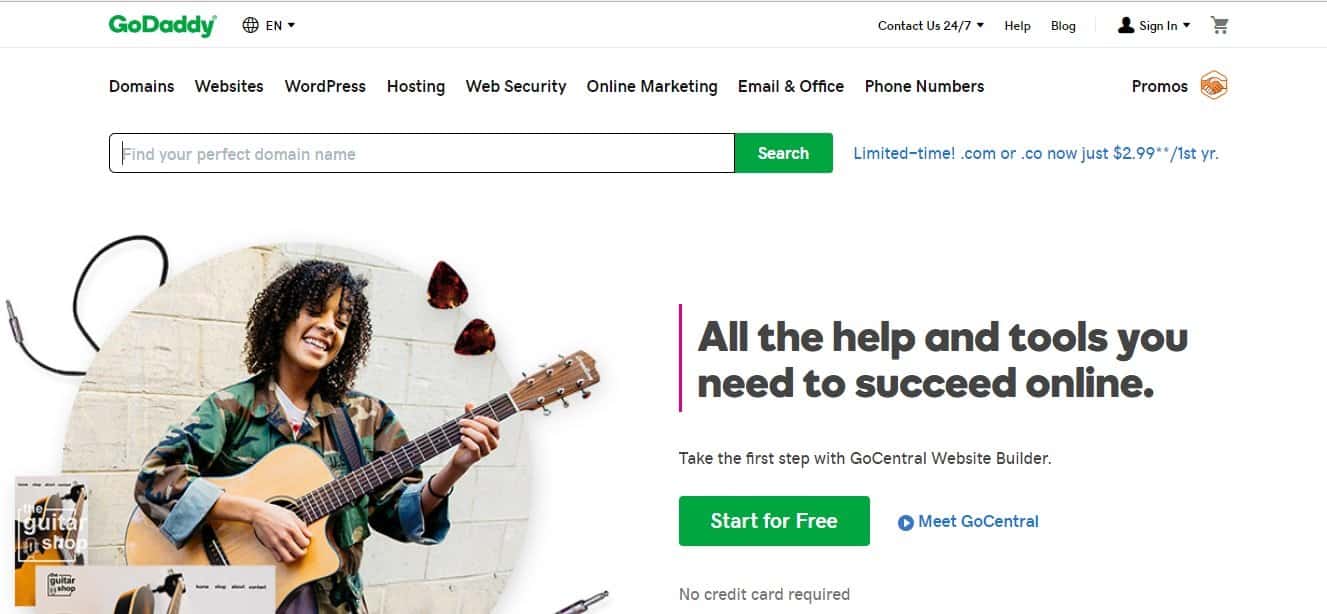
In order to get a domain name, visit such website as GoDaddy, for example. Type a desired domain name in the search box and click the search button.
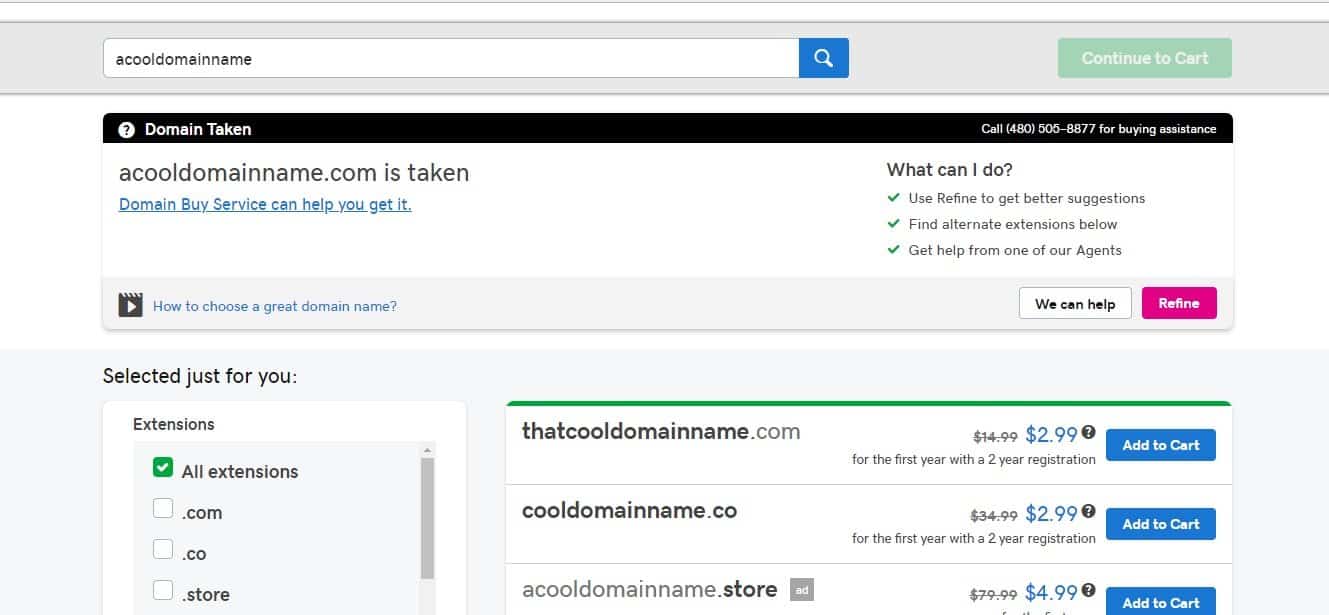
If your domain name is already taken, you will get a list of available ones. For example, I want to register the domain name “acooldomainname.com”, but it is already used. As you see, the service offers me some alternatives. I can choose a domain name from this list or look for another one.
If you want to learn more about how to choose the perfect domain name for your drop shipping store, feel free to read our article. And we come to the next step.
2. Find a hosting provider
Let’s say you have chosen and bought a domain name. Now it’s high time to find a hosting provider and place your website on the Internet.
I guess you have ever heard the word “server”. In simple terms, a server is a very powerful computer that keeps working 24 hours a day and stores a lot of information. Any information on the Internet is placed on one server or another and can be easily accessible from other devices such as desktop computers, laptops, tablets, mobile phones, etc.
In order to make your drop shipping website accessible to other people on the Internet, you need to buy some place on a server. This place is called hosting. A company that offers you a hosting is a hosting provider.
You can find a hosting provider on the Internet or use our services. AliDropship hosting solution guarantees high technical performance and provides you with 24/7 customer service and support.
Please note, before buying a hosting, make sure it meets the system requirements!
3. Install WordPress
When you have found a hosting provider and got a domain name, it’s time to build your website. For this purpose, you need to install WordPress on your hosting.
WordPress is software that allows you to build and manage your website without any knowledge about programming. WordPress is free and can be easily downloaded from the official website (WordPress.org).
You may ask: “Why should I set up WordPress, not another content management system?” The answer is simple, and you can find it right here. So, if you want to use the best solution for AliExpress drop shipping, setting up WordPress is a must.
As a rule, there are 2 ways to install WordPress – automatic and manual. And each of them doesn’t pose any serious problem. In our knowledge base, we have a detailed plan on how to install WordPress, so feel free to read it.
If you do everything right, your WordPress admin panel will look something like this.
4. Install AliDropship Plugin
Well, the hardest part is over. It’s high time to install AliDropship Plugin and start making money.
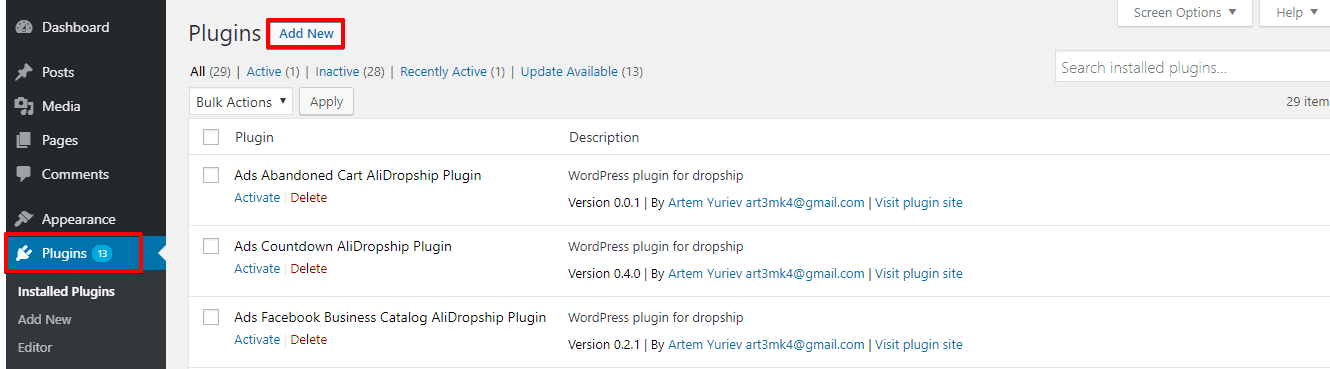
Go to your WP account, choose the Plugins tab, click the “add new” button, upload the plugin from your computer and install it.
My congratulations! Your plugin is installed successfully.
5. Activate your AliDropship license key
After installing the plugin, you have to activate it so that it could start working. For that purpose, you need your key license.
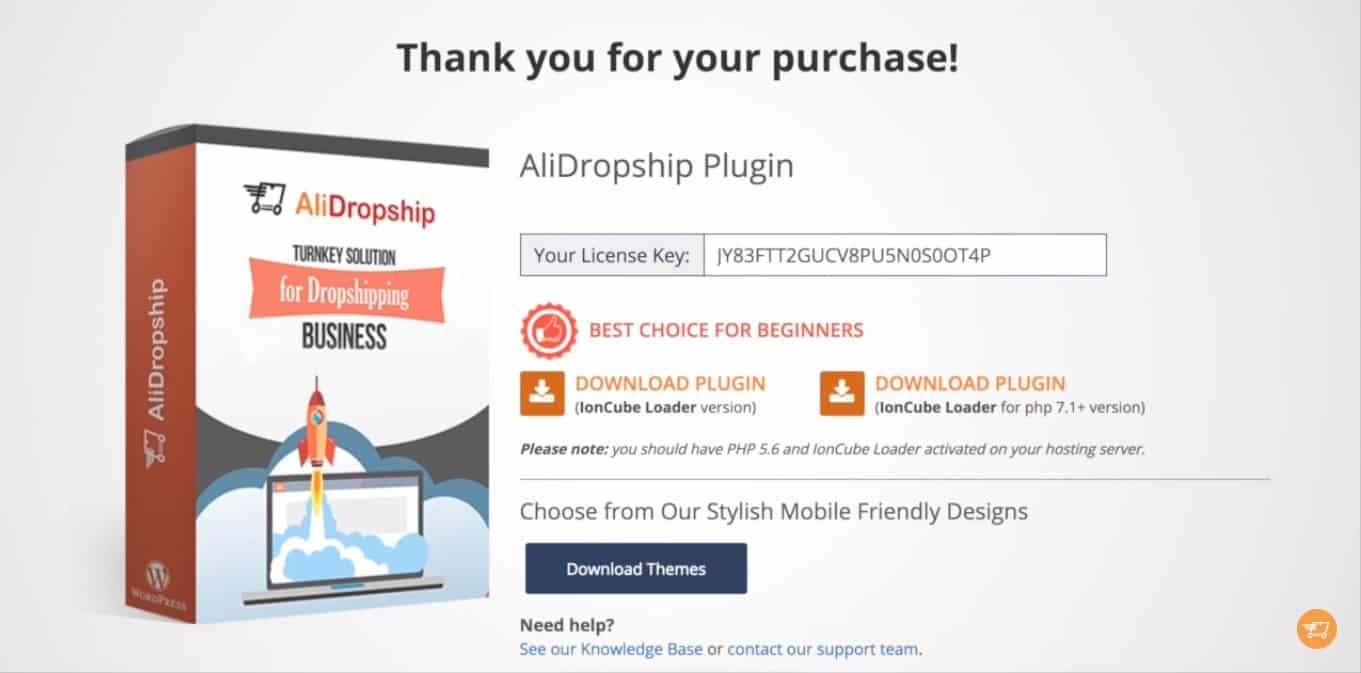
You can find the key in two places – on the Thank You page that you see right after purchasing AliDropship plugin or in the confirmation email that you can find in your e-mail account.
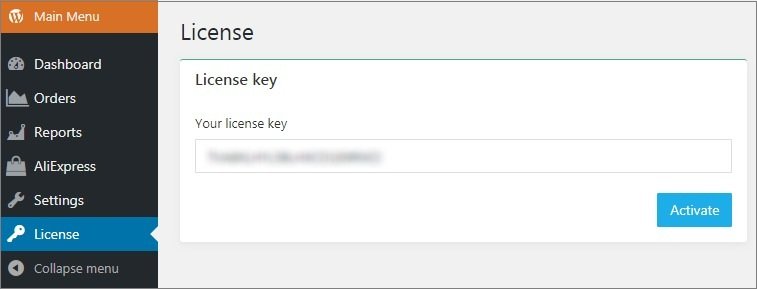
Copy the license key, paste it in the plugin settings and click the “Activate” button.
Well done! Your AliDropship Plugin is good to go.
Please note that the key license is unique and valid for one domain name only! So if you want to share it with your friends, it won’t do the trick.
Drop shipping for dummies: creative part
I hope you have successfully completed all these annoying technical things and are ready to demonstrate your creative potential.
A theme determines your website appearance. In other words, when you choose a theme, you choose the design of your website.
We offer you 4 beautiful themes that have great opportunities for customization. All themes are free and you can easily download them from our website.
We have put all the themes to the test and can safely say that each of them is perfect for customizing a drop shipping store. So choose the one that you like the most and download it.
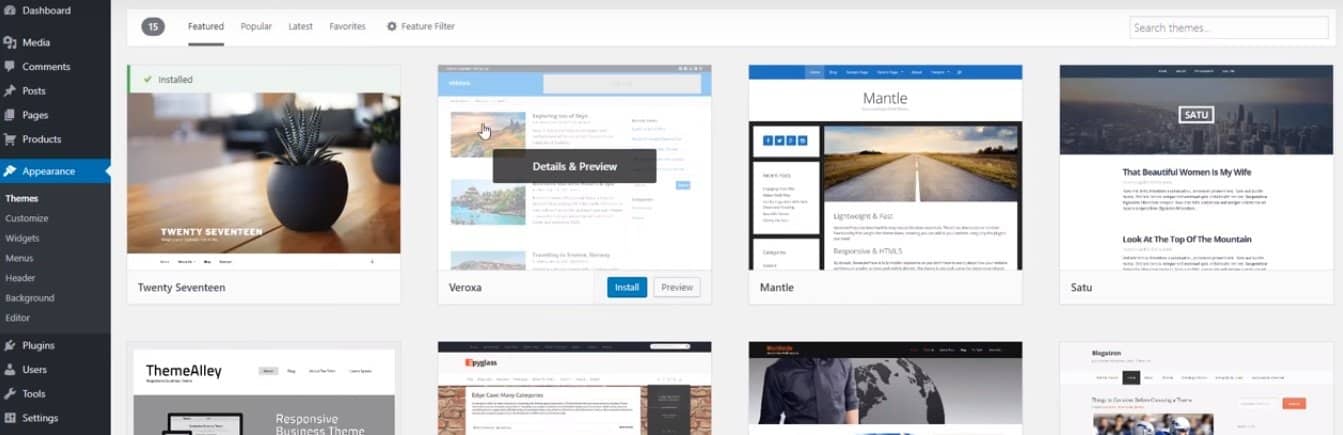
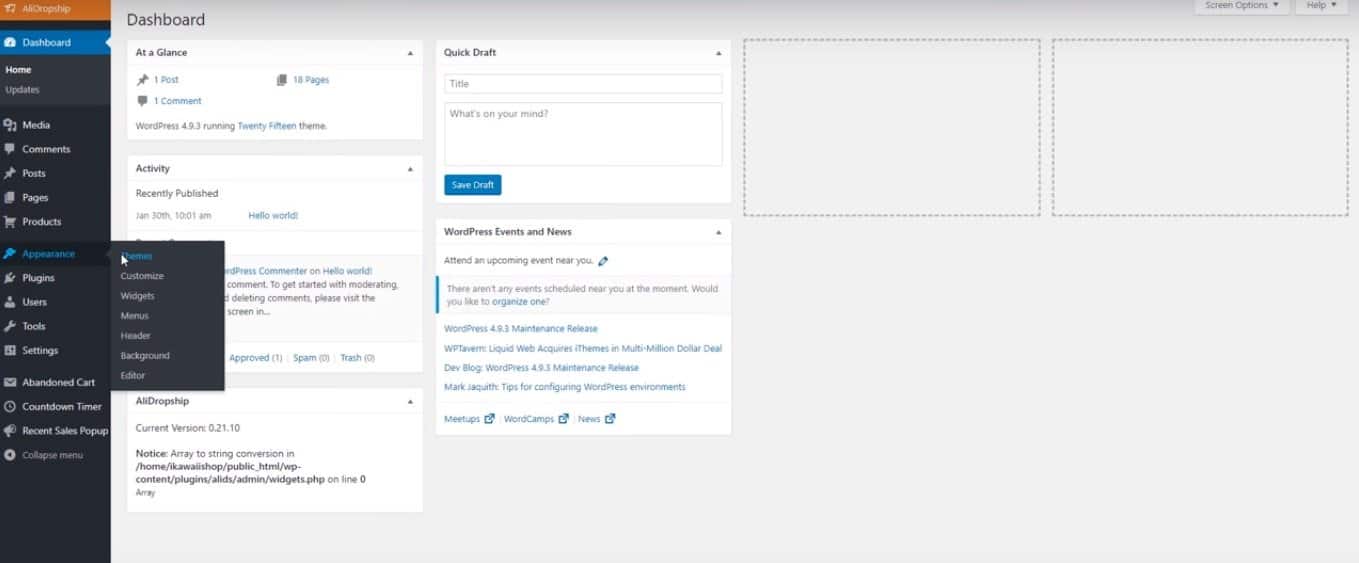
After that, go to your WordPress panel, find the Appearance button and click Themes. In the opened window, find the Add new button, choose the downloaded theme and install it. Don’t forget to activate the chosen theme!
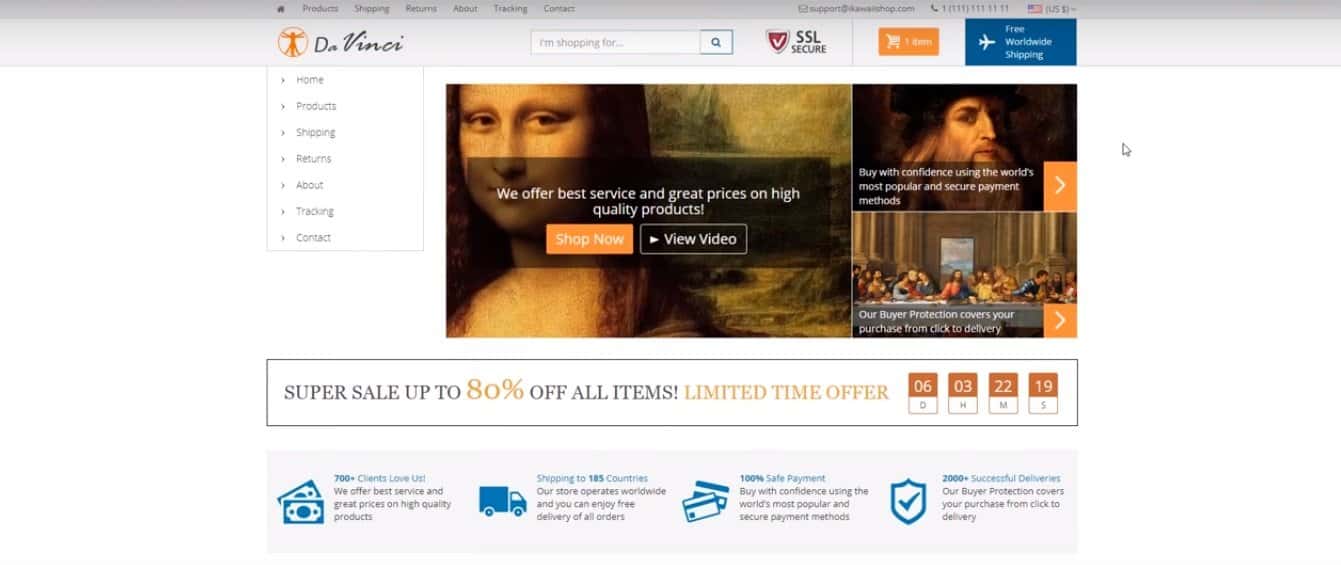
Let’s say, you’ve installed the Da Vinci theme. In this case, your store will look something like this. Now you need to make your website unique and memorable.
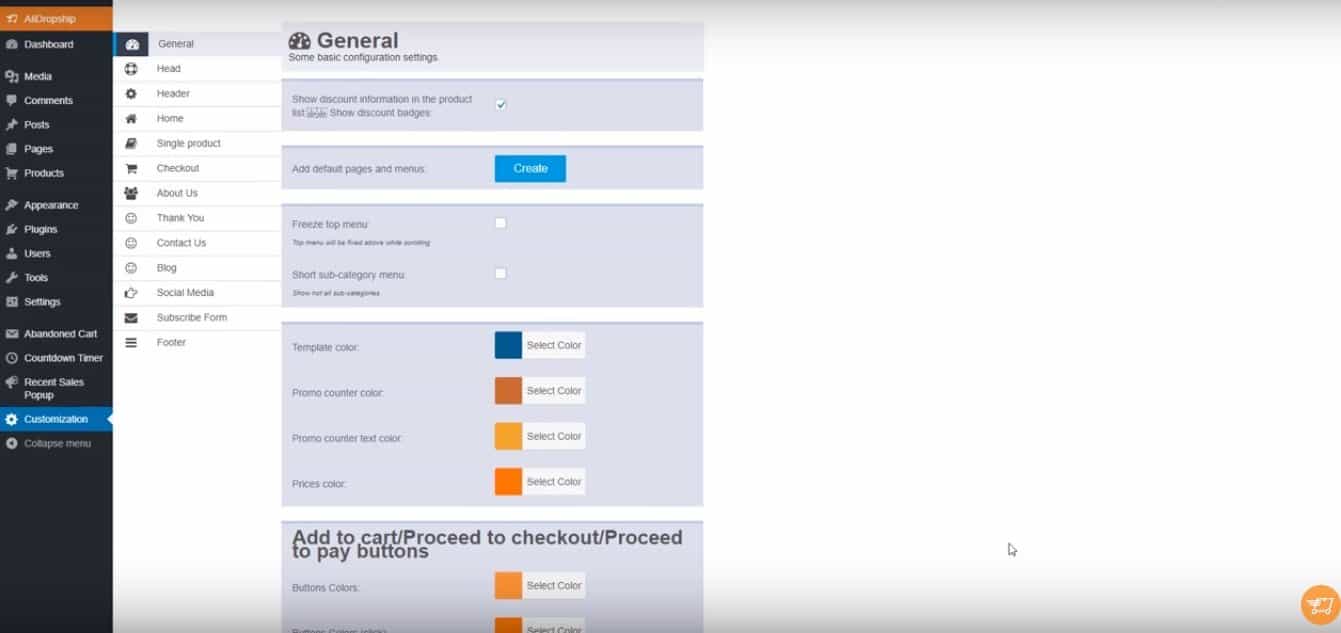
7. Customize your website
Before you get started your ecommerce business, you need to create the store design elements such as your own store logo, favicon, main page images and banners. You can do it on your own or with the help of professional designers. Of course, it is not necessary to appeal to the big design studios and pay them a lot of money! You can turn to freelancers to get it, for example.
In addition, don’t forget to create product categories and menus. Think of your website structure carefully and evaluate whether it is easy to use or not. If you have some doubts, ask your family and friends to test your website, think over their opinions and make all the necessary changes.
Drop shipping for dummies: the financial side
A nice profit margin was your ultimate reason to start this business, right? Let’s figure out how to deal with the money-related issues!
8. Choose the currency
Now, it’s time to start configuring the AliDropship plugin settings. Let’s begin with choosing the currency.
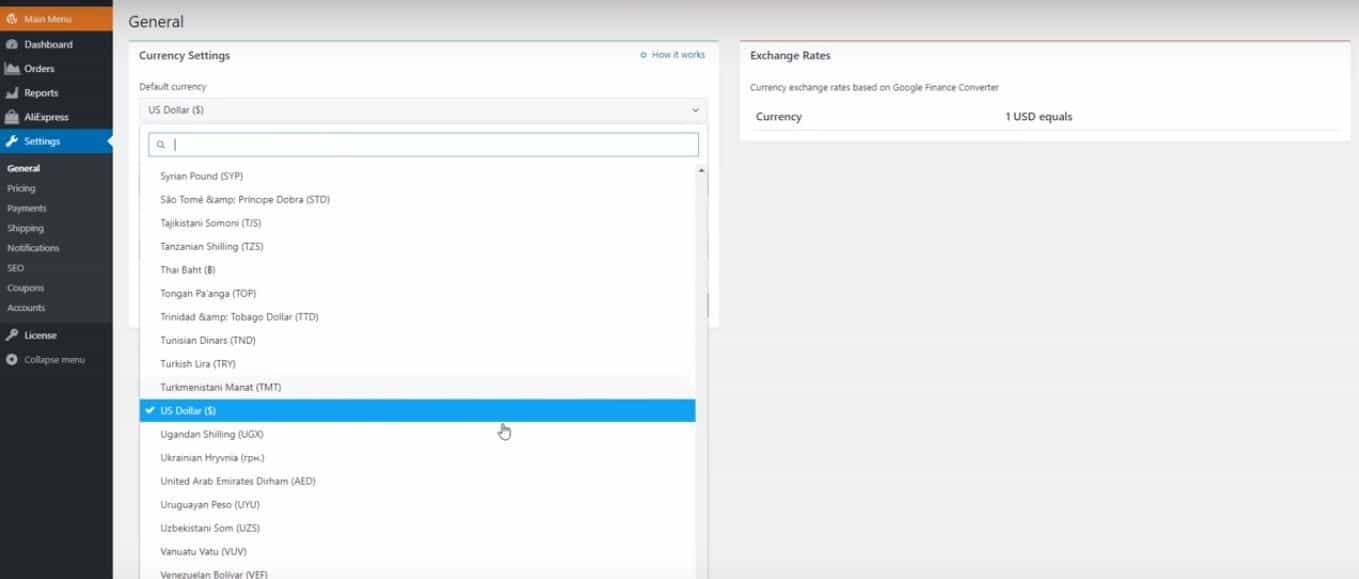
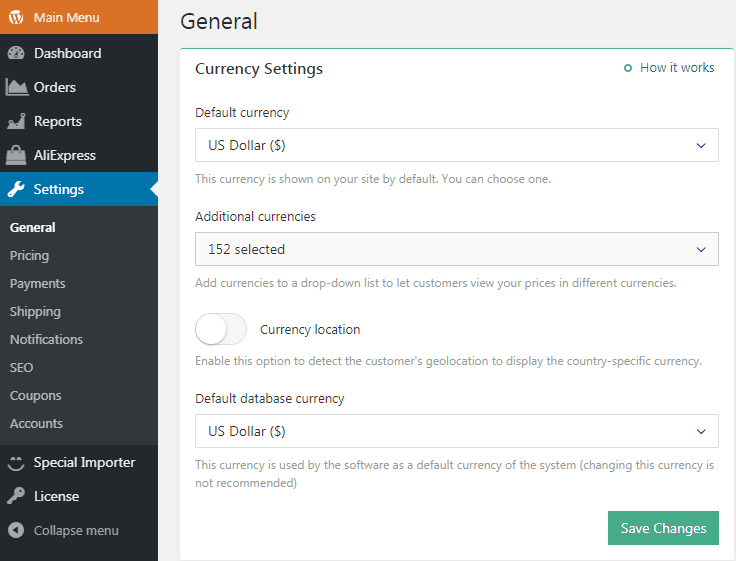
Click the orange button at the top of the menu, select the settings tab and open the general section. Here you can choose your website currency.
The default currency is US dollars, but the plugin supports many other currencies as well. Choose the currency you need and activate it. In case you want to let your customers view your prices in different currencies, don’t forget to select the additional ones.
9. Set up your markup formula
The currency is selected, so it’s time to take care of setting prices so that ensure the best profit margin.
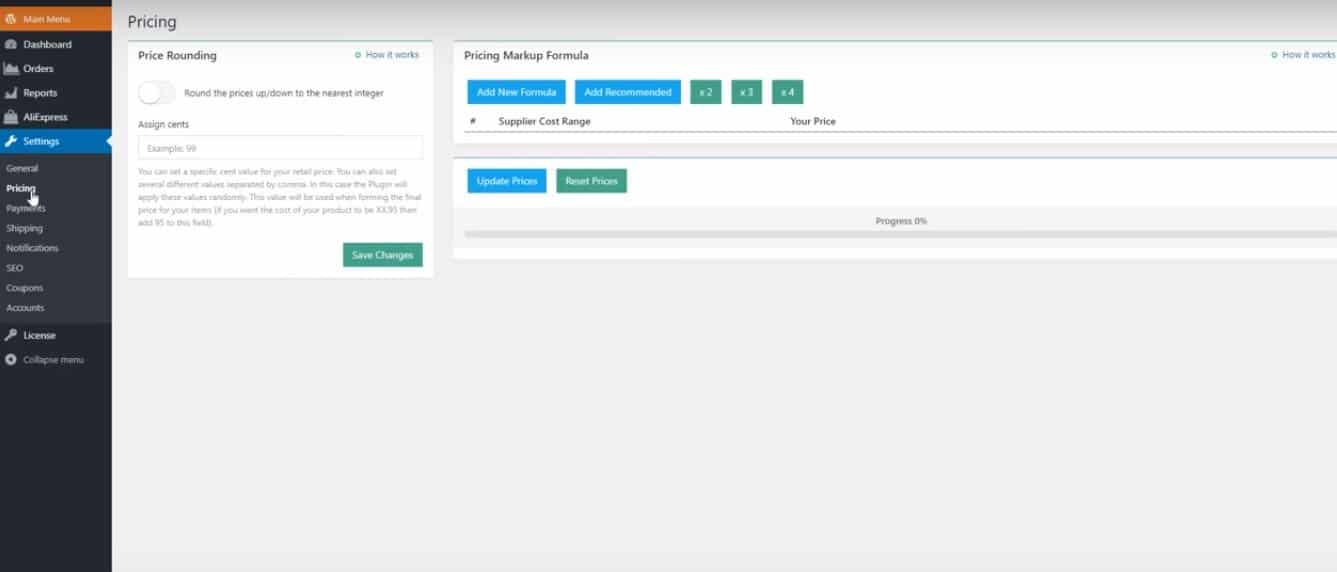
When you import products from AliExpress into your store, they are transferred with their original prices. In order to get profit, you need to determine pricing rules and set margins. AliDropship plugin has an effective system for that. You can create as many formulas as you need and set any kind of price you’d like.
However, we highly recommend you to get familiar with our pricing tips and follow them in the early stages of your business development.
Besides that, make a point of activating the rounding option. With this feature, such prices like $9.71 and $5.48 will be automatically changed to $10 and $5, respectively. In terms of buyers’ psychology and level of trust, it is a good decision.
10. Set up your payment gateways
After setting up the prices, you need to choose a payment gateway. In simple terms, a payment gateway is an online equivalent of a credit card terminal that one uses when buying goods at a brick and mortar store. AliDropship plugin supports many payment gateways, beginning with such giants as PayPal and ending with not very popular ones. Click the link and choose what you like the most.
Drop shipping for dummies: product pages
We’re getting close to the final! There are only 5 steps left! Let’s go!
11. Import products to your store
Now when almost everything is ready to start your ecommerce business, you have to fill your online store with goods.
To start importing products from AliExpress, you need to install AliDropship Google Chrome Extension. This tool allows you to import products in bulk, edit product descriptions and manage all the things related to delivery.
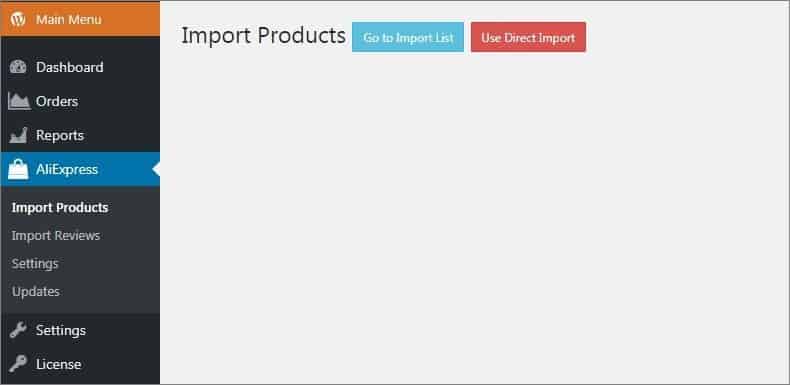
Once the extension is installed, click the AliExpress button and choose the Import products tab. Select the Use Direct Import button.
You will be redirected to AliExpress.com. Enter your search request in the search box and start selecting products with the lowest prices, free shipping option and the highest ratings – you can read more about the hunt for the perfect products here.
When the items are selected, you have 2 options of products import – single product import and bulk import.
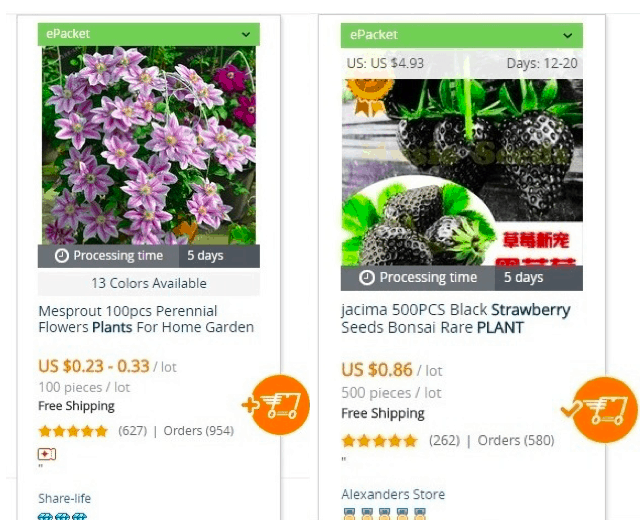
If you need to import only one item, click the orange AliDropship logo near it. If the item is imported successfully, you will see a tick near the logo.
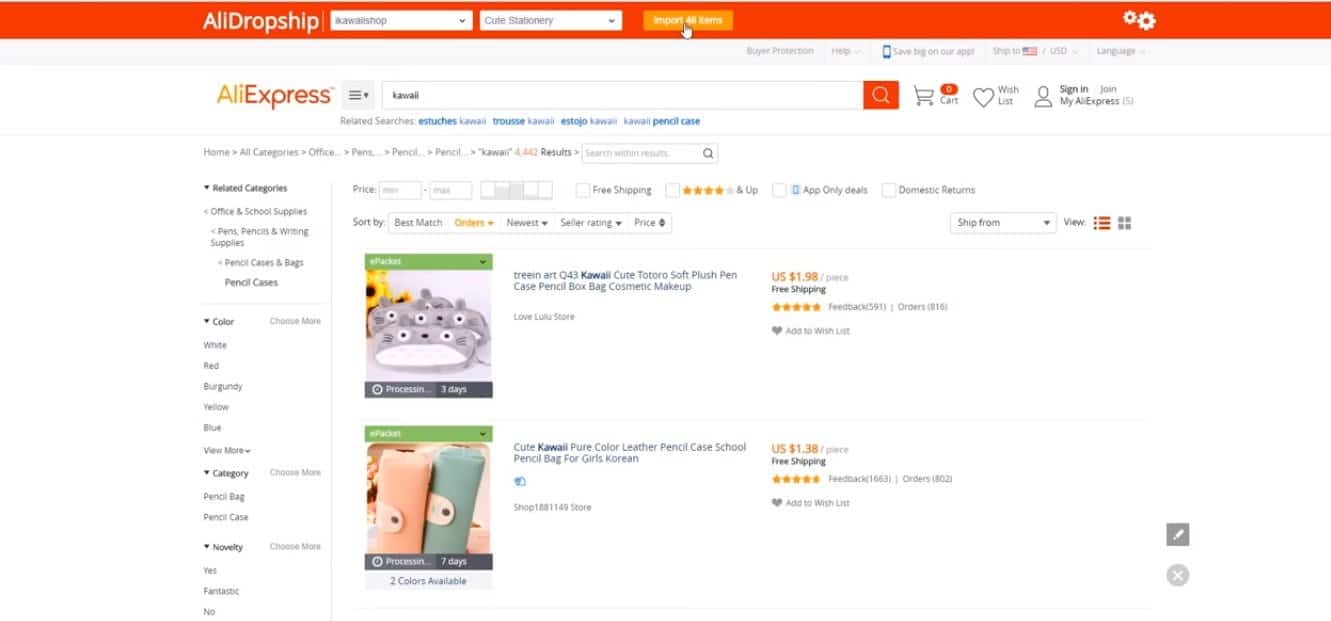
In case you need to import products in bulk, write the keywords in the search bar, select a category and click the import items button on the main panel. All the products will be imported into your Import list.
12. Edit your product pages
Every ecommerce entrepreneurs understand the importance of their product pages looking appealing to the customers.
There are 2 ways to edit product pages – you can do it before importing products or after that. Actually, it doesn’t make much difference.
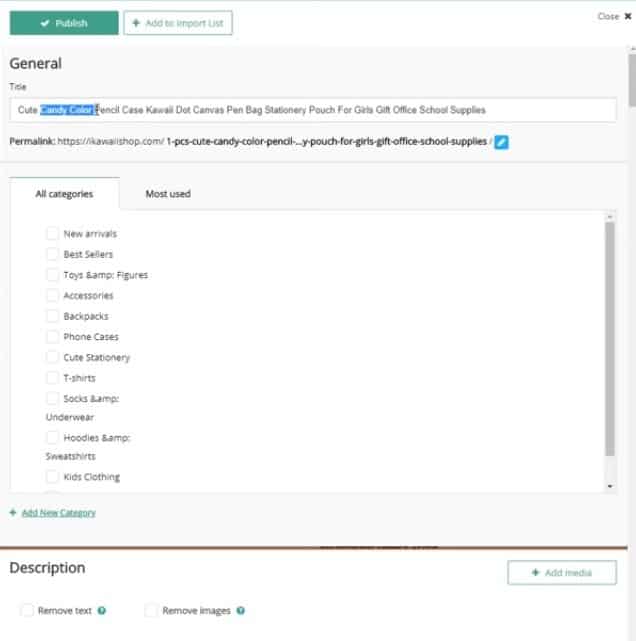
First, edit your product titles and descriptions and make them more readable and compact. It’s recommended to delete all the images from your product descriptions in order not to look like a copy of AliExpress. In addition, don’t forget to edit your permalinks and remove everything you do not need!
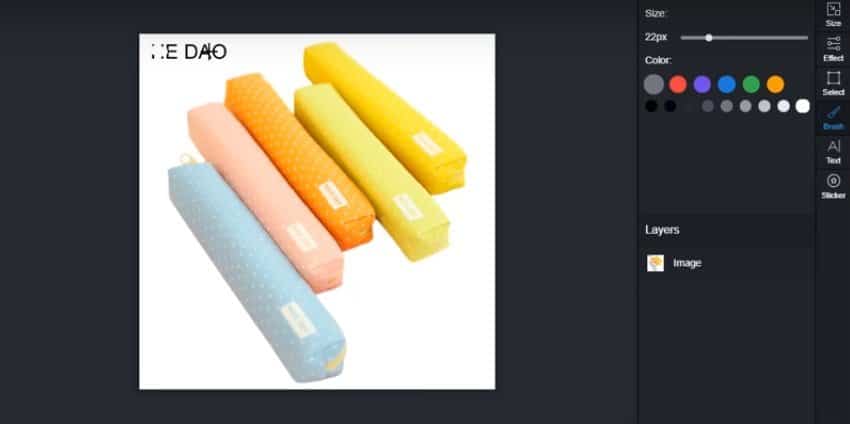
Secondly, you need to make changes in the pictures of your products. For that purpose, use the built-in Image Editor. Delete all AliExpress logos in the picture, change the size, add your own labels, etc.
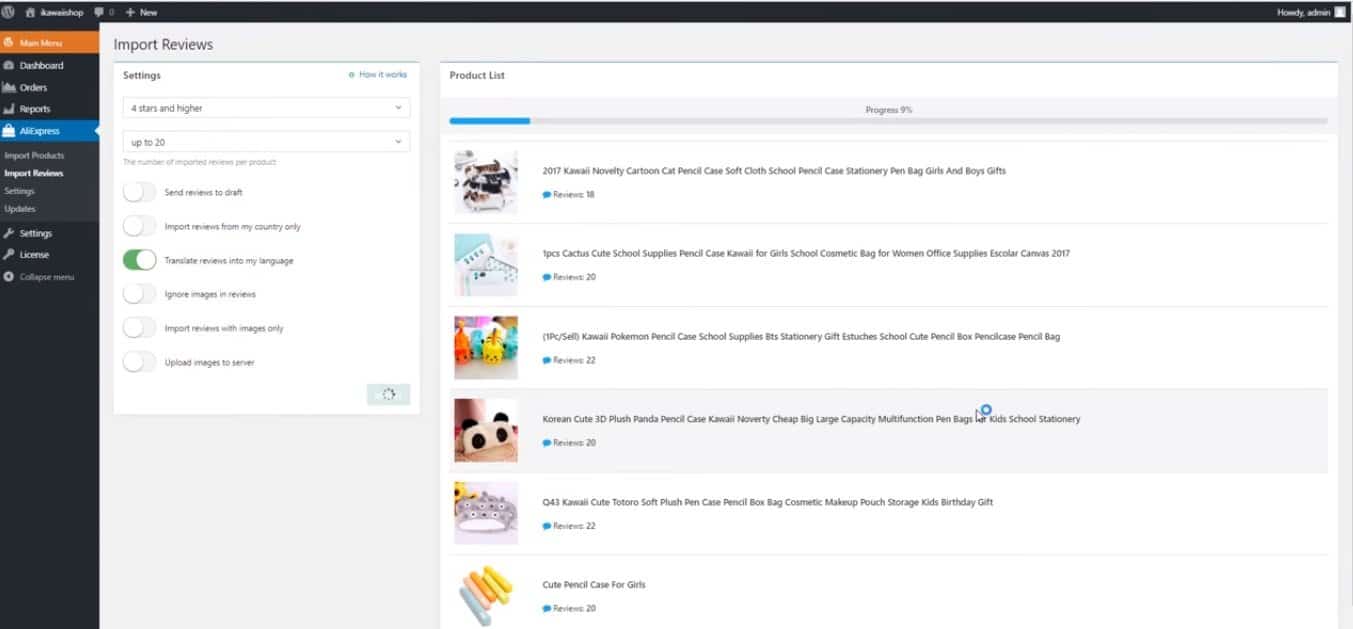
13. Import reviews to your store
The next step is importing reviews to your store directly from AliExpress.
Feedback is a powerful tool to build trust with your visitors and turn them into paying customers. Most of the conducted researches point out that feedback is very motivating and help people make decisions faster. Customers tend to trust each other more than any advertisement.
When importing reviews from AliExpress, you have many options – choose the number of reviews per product, add reviews only in your language, import reviews with images only, etc.
14. Set up shipping options
Decide on shipping methods your store will offer your clients. The plugin has a special section where you can enable or disable different shipping options and select the countries that you want to deliver to.
You can add up to four different shipping options such as free shipping, super savings shipping, standard shipping and expedited shipping. However, we highly recommend you to use free shipping options because it encourages customers to buy more or do it at all. A study found that 62% of all online consumers would not have bought products online if they had not received free shipping.
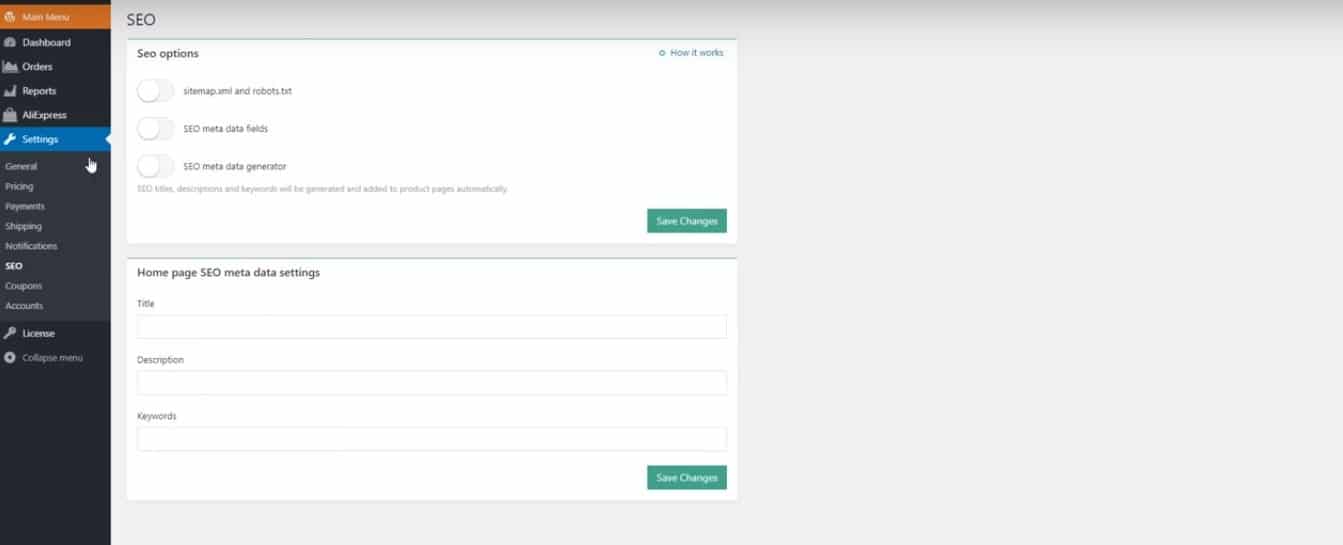
15. Set up SEO
Your drop shipping store is almost ready. The last point is your website promotion. We recommend you to use SEO tools available with AliDropship plugin.
That was the last point in our “Drop shipping for dummies” guide that allows you to create your drop shipping store from scratch. Of course, there is still much work to be done, but these steps are the basis.
As a bonus, we have prepared for you a set of questions from our support team that all beginners usually ask.
Top 5 frequently asked drop shipping questions of all time
1. Do you ship to…? How long is the delivery time to…?
AliDropship is not a drop shipping store. We develop and sell software for drop shipping and create ready-to-go drop shipping stores for our clients. That’s all. We do not ship any products.
If you’re asking about our plugins or add-ons, you will get them immediately after making a purchase.
2. Could you send me a list of the best AliExpress suppliers?
Congratulations! The ‘drop shipping for dummies’ guide is over, and you’ve learned the inside out of the store development process. Now you know how to set up your business, so you can easily follow our tips to start making really good money! Good luck!
















 Firm Funder