Welcome to the second edition of our weekly drop shipping polls!
As you remember, last week we’ve asked you about the best drop shipping niches – the research is already over, so you can view the results here to learn something really curious.
This time, we would like to ask you about the promotion methods you most commonly use.
As you know, we treat marketing tips and tricks really carefully, and we are sure it will be interesting for you to learn what your fellow entrepreneurs think about it.
So, let the survey begin!
Question #1
How do you promote your drop shipping store? Tick ALL the suitable answers
Facebook – paid promotions124 votes
Instagram – free promotions91 vote
Facebook – free promotions85 votes
SEO69 votes
Instagram – shoutouts57 votes
E-mail marketing51 vote
Instagram – paid promotions47 votes
Pinterest39 votes
Twitter39 votes
YouTube – free promotions26 votes
Google Adwords25 votes
Offline marketing23 votes
YouTube – paid promotions14 votes
Guerrilla marketing9 votes
Total Votes: 699Voters: 181July 13, 2017 – July 21, 2017Voting is closed
Question #2
Which of these methods works the best for you? Tick ONE answer only
Facebook – paid promotions84 votes
Facebook – free promotions17 votes
Instagram – shoutouts17 votes
Instagram – free promotions16 votes
SEO15 votes
Google Adwords7 votes
Instagram – paid promotions5 votes
E-mail marketing3 votes
YouTube – paid promotions2 votes
Pinterest2 votes
Twitter2 votes
Offline marketing2 votes
YouTube – free promotions1 vote
Guerrilla marketing1 vote
Total Votes: 174July 13, 2017 – July 21, 2017Voting is closed
This is it!
If none of the options is suitable, please write your answer in the comments section below.
We are really thankful for your help.
This questionnaire will be active for the whole week, so you can visit it from time to time to see how the results are changing.
We will publish the statistics in our blog and in our social networks accounts, so make sure you’re following us on Twitter, Facebook and Instagram.
Following the success of our previous Q&A session, we decided it’s a nice idea to keep it going!
This is why we present you the newest set of the most popular customers’ questions related to drop shipping marketing and promo.
Ready?
Steady?
Go!
1. How to drive traffic to the webstore?
Basically, to raise awareness about your drop shipping store, you can use:
Paid promotion methods such as Facebook Ads, advertisements on Instagram, Google AdWords, etc.;
Free promotion through SEO, e-mail marketing, video marketing, and social media marketing.
Each of these ways can work out brilliantly for your store!
Let’s look at them in more details.
Paid promotions are awesome if you know a bunch of things about your target audience: who are your customers, which social networks they prefer, what exactly they might like the most about your store offers, what are their interests, etc.
For example, while creating Facebook Ads, you will need to choose the target segment basing on users’ age and location.
At the same time, if you’re planning a campaign on Instagram, you need to define your viewers’ location (state, region, city, or country), demographic parameters (age, sex, and language), interests (apps they use, accounts they’re following, ads they’re clicking), and behavior (how exactly they use Instagram and Facebook).
Woah, seems pretty intense!
But actually, if you know (or at least can guess) a fact or two about your potential customers, you can handle this quite efficiently.
Sounds great, you might say, but what if the store has just opened?
What if there’s no data on potential customers and their behavior?
What if there is no money to spend on marketing?
No problems at all!
At the very first steps of your store operation you can easily go with a number of free drop shipping marketing tricks.
As you can see from our survey of the best promotional methods, free promotions on Instagram and Facebook are one of the most popular marketing instruments used in drop shipping community.
You probably remember our guide on promoting a store on Facebook – and if you don’t, you should definitely check it out! This strategy cost us nothing, but brought our store $4,587 in just 3 months.
And if you’re interested in promoting your store through search engine optimization, you will definitely like our basic guideline of best SEO practices.
All of these strategies work in a slightly different way. So, don’t be afraid to try all of them!
The more time you spend testing these techniques, the sooner you will find the perfect combination that boosts your store performance.
2. How to enhance conversion rate?
That’s a lovely question!
We’re working on a nice and long guide right now, so you will be able to read the detailed instructions soon – just keep an eye on our announcements.
In short, the areas you can improve are the following:
Technical part. Start with checking your website loading speed – if it is too slow, your visitors will get annoyed and leave your store. Also, make sure that all the links and buttons work as planned. Plus, look at the design elements you’re using – they shouldn’t be all bright, noisy and confusing.
Trust elements. Does your store have an SSL certificate that proves the website safety? Or your store visitors have no guarantees of their payments’ security? Don’t forget to write full details of payment and delivery terms, and of course, provide the social networks accounts of your store.
Product page. Follow our guideline and make a lovely product page that generates tons of sales!
Checkout procedure. It should be really simple for your store visitor to place an order and make a payment. Do you ask your potential client to register, or fill in too many forms and fields? Try to minimize your customer’s efforts!
3. How soon after setting up a webstore can I expect sales and profits?
It really depends on the intensity of your marketing efforts, and the strategies you’re using.
For example, if you only use SEO, you’ll have to wait for quite a long period of time – it will probably take 2-4 weeks until your website position changes.
And if you use paid promotions (if you treat them carefully, of course), it’s quite likely you’ll see the first sale on the very first day of your store operation.
Take a look at these success stories written by real dropshippers who share their own experience – all of them took various steps to generate sales, which is why their results are also quite different.
4. What should I do to make the website appear in the search results?
Well, first of all, you need to be really attentive when you choose a niche.
Read this article carefully to understand how to select a drop shipping niche that is perfect in terms of SEO.
Also, take a look at this article once again – here you will learn the basic rules of search engine optimization that will be the key to your drop shipping store success.
5. Could you please tell me more about your SEO packages?
First of all, we do the website audit – generally speaking, it’s a quick checkup that helps us see if there are any aspects that could slow down further search engine optimization.
Then, we work on Google indexing. Speaking in simple terms, we make your website content accessible to Google, and as the result, your website gets a higher ranking.
Also, we write a unique SEO article, as well as meta descriptions for the home page and categories’ pages. Since these unique texts contain the necessary keywords, it makes your webstore more SEO-friendly.
6. What promotional methods should I try first?
Oh, we would certainly say – TRY ALL OF THEM AT ONCE!
No, seriously.
If you have enough time and resources, it’s a wonderful idea to try everything at once – most likely, you will quickly find a unique combination of tools that suits YOUR store perfectly.
But unfortunately, we don’t live in the perfect world.
If you are pressed for time or money (or both), you can explore Facebook for a start. As you can see from our survey results, this is one of the most popular networks commonly used for promotional purposes. And, what’s even more important, our drop shipping community members also think it’s one of the most efficient marketing channels!
You don’t quite like social networks, or you think that you can’t use them to reach your target audience? How about email marketing, then? Address your customers through emails and monitor the results – this success story is a nice example of a successful email marketing strategy combined with other tools.
And of course, of course, please don’t ignore SEO!
Many people think it’s a ‘passive’ way of store promotion, but it’s working great!
This social network is perfect for building relationships with your target audience members, and for spreading word-of-mouth. As the result, your potential customers are encouraged during their decision-making process, and they are also supported after the purchase is already made.
The interaction they have both with you and with other clients of your store is essential for generating more sales, which makes Facebook the perfect place for establishing customer relations and generating more dynamic buying activity in the long term.
Also, Facebook is great if you need to target some narrow customers’ segment. The audience of this social network is huge, which is why you can be sure it is possible to select and reach the necessary people.
Instagram, in turn, is all about the pictures.
If your products are ‘visual’, it is a wonderful idea to showcase them on Instagram to get your audience interested. Proper work with this social network can do magic to your store.
Plus, it would be a great strategy to partner with so-called influencers – bloggers or well-known people who are somehow related to your business niche. A boost in the audience interest is the key to generating more sales in the nearest future!
Also, consider the demographics of your target audience. It is commonly thought that millennials, or younger people, are most likely to use and trust Instagram, while adults prefer Facebook.
But of course, you need to check it yourself – who knows, maybe your niche is really specific and it has a different pattern of consumers’ behavior.
So do your best to try all of the possible channels!
8. How to advertise on Facebook with success?
Being experienced dropshippers ourselves, we have developed our own efficient strategy of advertising on Facebook.
First, we do our best to increase the number of followers.
Then, when we agree that the number is fine already, we launch three types of campaigns on Facebook:
General campaigns that target our subscribers (we’ve already described them);
Remarketing campaigns;
Lookalike campaigns.
In short, Facebook remarketing means that your ads are shown to people who have previously visited your website. Seeing your ads on Facebook, these people will remember your offers, so it’s likely they will come back to the site to make a purchase.
And Facebook Lookalike audience is the segment of people who are somehow similar to your existing customers. Facebook uses some specific algorithm to find individuals who behave similarly to the people who already bought something from your store, and shows your ads to them as well.
Of course, that’s not the only possible way of planning your Facebook ads campaign. Take a look at this success story: that’s a really interesting way of working with Facebook that can be useful for you.
9. How to use Instagram to promote my webstore and drive sales?
But of course, this is not the only way of promoting a store through Instagram. Owners of business accounts can also try Instagram boosts. There’s a ‘Promote’ button, so tap it to choose the desired settings: the audience, the budget, and the period of promotion.
If you can’t devote long hours to manual Instagram promotion, try out automated solutions – that’s how you can do it.
10. How to use Google Adwords for drop shipping?
Google Adwords is a wonderful tool that will be really helpful throughout your whole drop shipping journey.
Basically, you will first use it at the very beginning of your work: this is how you will select the most relevant and promising keywords.
Later on, you will use Google Analytics to monitor your store performance and progress.
But most importantly, you will use it to plan and run advertising campaigns, so let’s take a closer look at them.
The ads you create with the help of Google Adwords can look like usual entries on Google search results page, or alternatively, they can be shown as Google Shopping ads.
The first category is really familiar – you surely saw such ads when you were looking for some item to buy online, or when you were simply browsing the web.
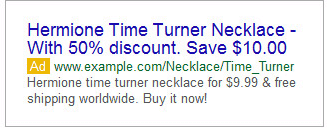
Such ads consist of the title where the product name is included, and some text description. These ads are the most efficient if we state the price and also mention the free shipping option. Try writing 3-4 different texts for each advertisement.
It is recommended to choose the best selling items for this type of advertisements – ideally, each ad should be devoted to a single item, and not to a group of products.
In 2-4 weeks, it’s time to track and analyze the results. The most important parameters will be ROI (return on investment), CPC (cost per click) and conversion cost.
Google Shopping ads are a bit different.
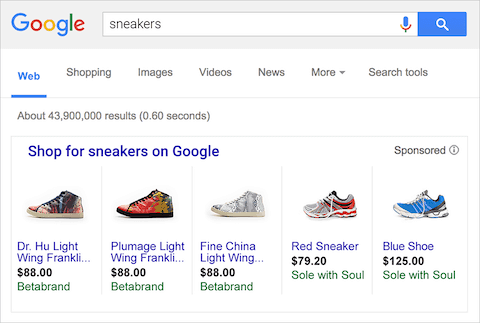
They are also shown on Google search results page, but they look like tiny announcements with a product picture, description, and price.
You can try out Google Shopping ads if you want to cut down your expenses – typically, such ads have a higher conversion rate, and at the same time, the cost of conversion is lower. These campaigns are considered to be a bit more efficient, but you will need to devote slightly more time to their prepararion.
These are the most commonly asked questions about marketing in drop shipping business. If you have something else to ask, feel free to leave your question in the comments section below!
These Facebook promotion guidelines are highly valuable for drop shipping store owners: with these tips, you can launch a affordable and efficient promotional campaign for your business!
Drop shipping is awesome.
You can run this business in any point on the globe, you don’t need much money to start, and it’s not necessary to have any previous experience in the field. Anyone has a chance to win.
That’s why people readily buy customized drop shipping stores or build nice websites themselves. Being inspired by incredible drop shipping success stories, they wait for tons of sales, and to achieve that, they start trying to promote their webstores.
Quite commonly, our support team gets questions about such type of social media marketing as Facebook promotions – people are wondering what should they do if they want to advertise their drop shipping stores on Facebook platform.
Let’s answer all these questions at once!
That’s why we have prepared these Facebook promotion guidelines!
If your potential clients use Facebook a lot, then yes, you should definitely go for it.
In our own experience, Facebook is a wonderful promotional channel in the majority of cases. The reason is, it is the most popular social network globally: according to the data of June 2017, Facebook has 2.01 billion monthly active users. This is much much more than Instagram (600 million), WhatsApp (500 million) and Twitter (284 million).
Wherever your potential customers live, you can easily reach them with the help of Facebook. The newest stats shows the following data about the geographic location of Facebook users:
Asia – 37,2%
Latin America and the Caribbean – 18,8%
Europe – 17,4%
North America – 13,3%
Africa – 8,0%
Middle East – 4,4%
Oceania/Australia – 1,0%
As you can see, this social network basically covers all the global regions. So, if you are not targeting some specific and narrow customer segment living in a very remote part of the globe, it won’t be difficult for you to connect with your audience through Facebook.
2. How can I promote on Facebook?
Well, first of all, you need to be present on Facebook, so you will have to create and run a page dedicated to your drop shipping store.
When the page is created, you have 2 ways of running a promotion on Facebook.
The first way is share your posts in Facebook groups that are somehow related to your store idea.
It’s not difficult at all – read this step-by-step guide to learn how we used this strategy for one of our own stores.
The second way is to create and run Facebook advertising campaigns. Speaking in simple terms, you create a promotional message and pay some money to show the ad to a selected group of Facebook users.
At the moment, we are preparing detailed Facebook promotion guidelines. As for now, you can read official Facebook instructions to get a general idea about launching and managing Facebook Ads.
3. Should I register a business account on Facebook?
If you’re only going to place promotional posts in other Facebook groups, you don’t need to get a business account.
If you want to create and manage Facebook ads, you need to get a Business Manager account. To do this, go to https://www.facebook.com/ads/manager – this is how you will get an access to your Facebook Ads dashboard. Here you will administer promotions of your business.
To create an account, you need to submit some additional details – your account information, and also the payment method you are going to use.
The account information will include your account name, business name, business address, time zone, currency, etc.
Providing your payment details, you can choose one or several preferred payment methods – Facebook accepts multiple payment options, including credit cards and PayPal payments.
As soon as all the necessary details are submitted, you can plan your Facebook advertising campaigns and enter a promotion.
You will be able to add and manage up to 5 Facebook pages through this Business Manager account.
4. When I do Facebook Ads, how can I target the audience correctly?
You surely know something about your potential customers, right?
Even if you only have a general idea of a portrait of your average client, it’s a good starting point.
When you are creating an advertisement campaign on Facebook, the system asks you to set some parameters of the audience who is going to see your ad:
Connections to your Facebook page (followers, commenters, etc.)
When you set these parameters, you create a new audience – you can save it and use it later for your further campaigns.
If you feel that you need to target your audience even more precisely, you can use:
Custom audiences
Lookalike audiences
Custom audiences consist of people who are already interacting with you somehow. There exist various types of custom audiences, for example:
People who gave you their email addresses, phone numbers, or Facebook IDs;
People who have recently visited a specific page on your webstore;
People who took specific actions in your desktop or mobile app (if you have one);
People who engaged with certain ad types on your page.
As you can see, it’s great to work with custom audience because these people are already interested in your store offers. Don’t miss out the opportunity to get in touch with them! To learn more about this type of audience, you can read the official Facebook guide.
Lookalike audiences consist of people who never interacted with your store or brand before. Still, they are really important: these audiences are created by the Facebook’s own special algorithm.
Facebook takes a custom audience you already have in order to generate an absolutely new audience.
Most likely, these new people have never heard anything about your business; still, they share significant features (hobbies, interests, behavior patterns, etc.) with the people who already cooperate with your brand.
Chances are, they will like the ad you’re targeting at them, and you, as the result, will get a bunch of new loyal customers. To learn more about creating a lookalike audience, you can read the official Facebook guide.
5. How much money should I spend on the Facebook promotion?
The real question here is ‘How much money CAN I spend on Facebook ads?’
If you can’t afford spending on advertising right now, wait a bit until you have some savings.
The thing is, if you only have money for 1-2 ads, you won’t be able to track their performance and understand whether it’s actually efficient. You simply won’t gather enough data to watch and analyze.
We recommend you to try 3-4 different ad types during one month. This will help you get enough data on your ads performance and understand what can be improved. So, do the math and calculate how much you will have to spend for your very first Facebook advertising campaign.
When it’s over, you’ll be able to analyze the results and rethink your costs if necessary. The more you experiment, the higher are your chances to find a winning combination of Facebook ad types.
6. What content should I post and how often?
When you run the Facebook page dedicated to your drop shipping store, it’s important not to:
Get forgotten (and it can happen if you don’t post anything for months)
Become too noisy and spammy (and it can happen if you post every hour)
In other words, you need to keep a healthy balance.
The barely minimum is to post at least once a week. If you’d like to stick to this strategy, it’s the best idea to make posts showing and describing your products, announcing sales and introducing special offers.
If you have the energy to post more often, you can make posts once a day. In this case, you should think of mixed content. Apart from the post ideas mentioned above, you can also tell your subscribers your store news, share your buyers’ feedback, make little polls and surveys, announce your blog posts, ask for your subscribers’ opinion on your product range and service quality, and in general, keep your readers interested and entertained. The more they are engaged in conversations, the better!
Another popular way to increase engagement is running a contest or a giveaway. Facebook contest is a cost effective solution to attract attention, collect emails, and increase brand awareness in a short time. You can use third-party apps and services for FB promotion, so you don’t need to reinvent the wheel. But remember that you need to follow all official rules set in FB Page terms. For example, in your contest, as well as in any other FB promotion, you must inform that it isn’t sponsored, endorsed or administered by Facebook; you cannot use Personal Timelines or friend connections to administer promotions; and there are other regulations you should observe. The greatest thing in contests and giveaways is that you can vary your contest rules according to your goals and give different tasks to your audience. And as a result – you rise product awareness, collect the data you need and boost your sales!
7. How should the FB promotional post look like and what should be included in it?
When you think of an idea for a post on the Facebook page of your store, make sure that it contains:
Visual part
A bright high-quality picture or a short interesting video grabs attention of your page visitors and makes them interested in reading further.
Caption
Write a short text to comment or explain the visual material. Don’t make it too long – 150-200 characters will be more than enough.
Call to action
The reason why you make these posts is to motivate people on making a purchase, right? Encourage your readers to take a look at the newest offers, or to visit your website, or to share their feedback, or to ask you something about the items, etc.
Hashtags
Hashtags help people surf Facebook and find the type of content they’re interested in. Think of a catchy and memorable hashtag describing your business, and use it consistently for every post you make. Also, put 2-3 popular hashtags related to the content of each separate post. Don’t be afraid to experiment with these additional hashtags!
8. Are there any automated services for Facebook promotion?
We understand that it’s not always easy to find the time to manage your Facebook page.
An automated promotion tool we can recommend is Social Rabbit Plugin. Basically, the plugin uses the settings you’ve specified to create human-like posts in 4 social networks – Facebook, Twitter, Instagram and Pinterest.
The plugin can automatically share the content of your drop shipping store in social networks, attract mass attention to your Facebook posts, and also repost popular content from related social media accounts.
AliDropship company doesn’t provide the service of launching and managing advertising campaigns on Facebook for you.
Instead, we can offer you the service of Social Media Creation. In other words, our dedicated specialists can create a professionally designed Facebook page for you. This account will be integrated with your website, so your store visitors won’t have any troubles finding it.
When your Facebook page is ready, we won’t be running it manually. However, we can help you install and set up Social Rabbit Plugin. Making automated posts and attracting the public interest towards this page, the plugin will make it much easier for you to find new customers on Facebook and boost your drop shipping store performance.
Did we cover everything you wanted to know about Facebook promotion in this guideline? Feel free to leave your questions in the comments’ section below!
Lots of online entrepreneurs are wondering how to manage social media in the best way possible. To make it more time-saving and energy-efficient for our clients to run their drop shipping stores’ accounts on social media, we commonly recommend getting Social Rabbit Plugin. Here’s what you need to know about this awesome tool!
Why is this plugin recommended for social media management?
Let’s start with the basics: why should you even care about social media?
For any drop shipping store, a good-looking and regularly updated social media account is a blessing. It helps spreading the word about the wonderful store offers, proves that the business is alive and well, and lets your store get higher position on Google search results page.
Of course, it takes considerable effort to monitor and update multiple social media accounts of your store on a regular basis. As a drop shipping store owner, you have a bunch of other important things to do every day, which is why many entrepreneurs simply don’t research how to manage social media because they think it is not their first priority.
That’s exactly the reason why Social Rabbit was invented.
Social Rabbit plugin is a tool that helps you save time you’re spending on social media marketing activities.
Social Rabbit makes your store’s social media accounts look like you’ve invested hours of your time into thoughtful planning and careful crafting of every post (while actually you haven’t).
You simply select the necessary settings once, and the Rabbit uses these settings as the basis for its non-stop activity of managing multiple social media and placing high quality posts in every account.
The followers get highly engaged, the occasional readers become first-time buyers, and the loyal customers keep checking your account in search for a fancy new item or just a funny new post.
You’re getting so much for doing so little!
How to manage social media accounts with Social Rabbit? What can it do?
Okay, so there are 4 major social networks that have a more or less global coverage: Instagram, Pinterest, Twitter and Facebook.
Based on the settings you choose, Social Rabbit can automatically perform several types of actions in your store accounts on any (or all) of these social networks:
Publish your store products
In this case, each post is dedicated to one of the products and services from your store: Social Rabbit automatically publishes a random item’s image along with its title, price, and link.
Make entertaining posts
Using the text templates, hashtags, and images you’ve previously added to the database, the Rabbit randomly combines these elements to create short-spoken, yet attractive and catchy posts. It will do all social media content marketing work for you.
Repost blog articles
If you are running a blog in your store, you certainly want as many people as possible to read what you’re writing. Again, Social Rabbit randomly picks one article out of your blog posts, and places its link, title, and short extract in the relevant social media post. It is also possible to publish these articles in chronological order.
Sharing content generated by other users
To do this, Social Rabbit is scanning Instagram pages that contain the keyword(s) you’ve specified, and finding content published on these accounts. Then, the Rabbit reblogs these posts within the same social network: for example, it doesn’t repost Instagram posts to your Twitter feed, and vice versa.
Boost your social media accounts activity
Again, the Rabbit goes through the pages that contain the keywords related to your store niche. The Rabbit automatically follows these pages, likes the post published there, and even comments them in order to attract attention to your store social media profile.
It’s not always necessary to have all of these actions performed at once. It’s up to you to decide which of the plugin functions you enable now, and which ones you will turn on later as an experiment.
Search shoutout partners
This function is only applicable to your Instagram account. You need to specify the keyword(s) that are related to your store, and write a template message to ask for a business partnership (you can find an example here). The Rabbit uses the provided range of keywords to find appropriate Instagram pages, and automatically sends their owners the template message you’ve created.
How to manage social media automatically without getting a spammy-looking account?
People commonly ask us: will the Rabbit make them look like spammers?
It certainly will not, and here is why.
Consider this: how do you understand that a person is a spammer?
Most typically, we guess that an Internet user is spamming because his/hers actions look like something mechanical and even detached from reality.
Their typical behaviour is to leave meaningless comments and even direct messages that commonly contain nothing but a suspicious site link and/or a short phrase like ‘follow me plz’.
Plus, these users do a really random mass following with no obvious pattern or reason: they simply add everyone they see (which leaves their ‘victims’ slightly confused).
Finally, even if spammers make some effort to manage their own pages, their accounts don’t inspire much trust: they contain low quality images or poorly designed collages, and incomprehensible texts. What’s also remarkable, while figuring out how to manage social media, they don’t pay any attention to timing and place their posts with some weird frequency: their account can be silent for several days in a row, and then suddenly it bursts with activity which means you get forced to see dozens of questionable entries published in several minutes.
It’s you who defines what will be written in the comments left by Social Rabbit: you prepare a database of possible message options, and the Rabbit only uses the phrases you’ve specified.
The same goes for photos and collages: you upload a range of relevant high-quality images that are dedicated to your store and to this whole thematic area in general, and the plugin never uses any extra sources to get the necessary images.
Also, you don’t start following hundreds of random people when you activate this plugin: you only add the accounts that are somehow related to your business niche. So, you exclusively attract attention of the people who are potentially interested in your store offers and, naturally, they are likely to make a purchase from you, or at least get curious about your social media account.
Obviously, the posting frequency settings can be customized any way you like it: Social Rabbit can schedule posts within the time frames you’ve set. It means you don’t have to worry about uncontrollable production of 20 publications in 1 minute!
And finally, there is one ultimate thing that makes it 100% clear you’re not a spammer: it’s the overall appearance of your social media pages. If they are set up and designed in a neat, professional and aesthetically appealing way, they leave no doubt about your reliability and fair business play. We have previously explained how to write a trustworthy and informative Instagram bio, but if you feel you need some additional help with this task, an expert service of social media creation might be a great solution for you.
Will this social media plugin really boost my business?
Absolutely.
When it comes to sharing the knowledge about additional technical solutions for drop shipping stores management, our in-house experts performs meticulous checks of every recommended piece of software. This way, we can be completely sure we’re not promoting some malware, plus, we filter out the plugins and applications that don’t show any significant efficiency.
Social Rabbit Plugin is systematically used to boost profits in our own stores (as you probably know, our dedicated project team manages, promotes, and analyses the performance of several self-owned drop shipping stores). As the result, these specialists get the opportunity to test a full range of social media management techniques and scheduling tools, and deliver their experience to fellow entrepreneurs who have the same marketing needs – including the questions on how to manage social media!
The solid background of using Social Rabbit lets us safely say that this plugin:
Makes it possible to easily generate ‘human-like’ posts that don’t look spammy
Saves about 6 hoursevery day as the plugin produces ready posts that get published without extra management
Raises awareness about the promoted stores as the plugin helps to increase the number of social media followers
Attracts stable social media traffic to the stores in question
Boosts the number of orders placed in our stores as the plugin specifically attracts the audience that is likely to make a purchase
If you’re interested to find out more about our experience of learning how to manage social media with the highest efficiency, take a look at this article. In this case study, we explain how we achieved 70,000+ Instagram followers for one of our stores’ accounts, show the stats on buyers’ behavior, and even provide a screenshot with the settings we’ve chosen for the Rabbit in this case!
Speaking of which… how to set up Social Rabbit correctly?
From the technical point of view, the process of setting up Social Rabbit is quite easy and well-documented.
After you complete the plugin installation process, you first of all need to connect the plugin to the every social media account you will be promoting. It is done through the ‘Main Settings’ tab: in the Social Rabbit’s Knowledge Base, you can find the detailed instructions on enabling these main settings for Facebook, Twitter, Pinterest, and Instagram.
Done?
Great!
Now, it’s time to specify what the Rabbit will be writing and posting on your social media channels.
You need to start with adding pictures to the Social Rabbit Gallery on Instagram, Facebook, Twitter and Pinterest: as we already mentioned it before, it’s a kind of a library or a database which the Rabbit uses to create a post. Sooner or later, each and every one of these pictures will appear in your social media posts, so be careful to only upload high-quality photos and attractive images!
In order to specify the details of the actual publishing settings, go to the relevant ‘Posting Settings’ tab for Facebook, Twitter, Pinterest, and Instagram (for your convenience, each of these settings instructions pages has a relevant video tutorial included).
You need to assign its own posting settings for each of the social networks, but in general, they all cover the same parameters of these self-generated posts:
The posting frequency
You can set the exact amount of days, hours, and minutes that will be the periodic sequence of the posts.
The posting time randomizer
If each one of your posts gets published on exactly the same time (for example, at 10.00, 16.00 and 22.00 every day), your followers/subscribers might think it’s a spammy mechanical action. In order to make these posts look more ‘real’, it’s recommended to turn on the randomizer: it lets you pick a ‘deviation’ time period, and uses it to publish each the posts on a slightly different time.
Hashtags
If your social media post contains no hashtags, it won’t get discovered by people who are interested in this particular niche or area. On the Social Rabbit Posting Settings pages, you can easily write the hashtags that are relevant for the business focus of your store. Also, Social Rabbit plugin uses machine learning to look at any product featured image, and suggests the appropriate hashtags for this item.
Text templates
Here comes the most exciting part 🙂
It’s necessary to specify what exactly will be written in these carefully prepared self-generated posts. Remember that the Rabbit doesn’t write its own texts with the power of artificial intelligence 🙂
The idea behind the tool was to make these automated posts look as human-like as possible, so the system simply takes and randomly combines different pieces of content YOU have previously added to its database.
This is why it is so important to write short and slightly ‘abstract’ texts that match EVERY picture you’ve uploaded! Otherwise, it’s possible that the randomiser will make a meaningless post with a picture and a text not fitting each other at all. That’s a spammy-looking thing you need to avoid!
These texts are written in the Template field, and actually, it’s not only words and emojis that can be put there. The system also makes it possible to write so-called ‘tags’ along with the text. Each of the tags is a ‘shortcut’ for a specific action: for example, if you write the %URL% tag, the published post will include a product link, and if you write the %PRICE% tag. The post also will contain this specific product price. For your convenience, the full range of these available tags is written right below the Template field.
As you remember, the Rabbit doesn’t only publish self-generated posts: it can also repost the articles from your blog, and this is how you can set up the Blog Poster for Twitter, Pinterest, Facebook and Instagram.
Apart from this, Social Rabbit also attracts public attention to your account because in can automatically follow other social media pages that contain the keyword(s) relevant for your store. For example, here you can read how to set up this smart mass following on Instagram.
Basically, almost every single one of all these settings have a wonderful ‘Set Recommended Settings’ button. This way, if you’re not really sure, for example, what posting frequency to choose, you can start with the default settings, and then slightly edit them as an experiment.
As you can see, Social Rabbit is a wonderful plugin that is proven to give businesses a considerable boost. Aren’t you curious to give it a try in your own drop shipping store?

















 Firm Funder